

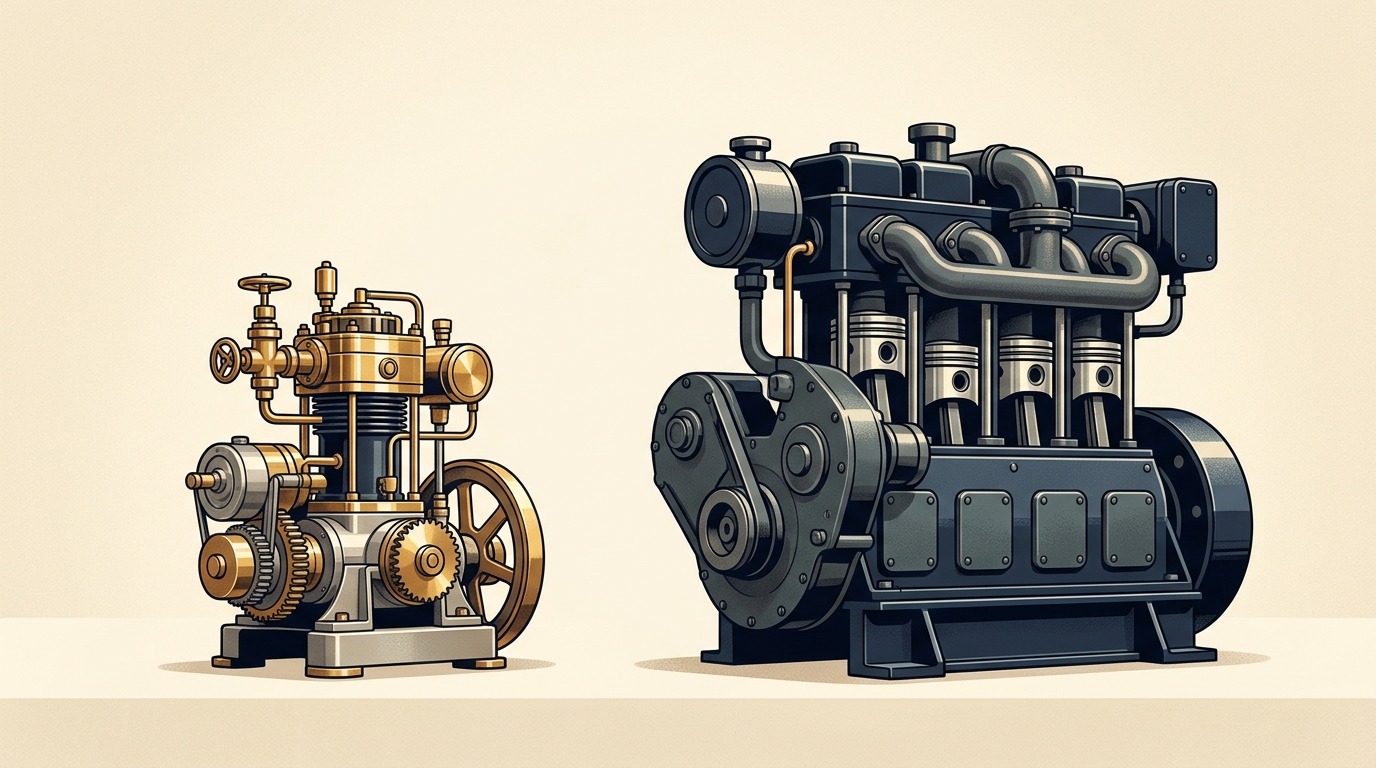
Every owner-CEO can name their best customers. But there are actually two distinct kinds of them, and most businesses only manage one of them well.
You Run Two Profit Engines, Not One
A mature business almost always operates two economic engines at once. The first is your high-margin 20 percent: premium clients, specialty work, the projects where your expertise commands a real premium. The second is your predictable 80 percent: volume work, repeat business, the steady base that keeps the team busy and the lights on. Both are good customers. Both belong on your roster. The mistake is treating them as one undifferentiated pool of revenue, because the moment you blend them, you lose the ability to manage either one well.
Why Your Dashboard Only Shows You One
Most analytics setups are built to measure the 80 percent. Volume work is easy to count. It produces clean, repeatable metrics: jobs completed, units shipped, average ticket, monthly recurring revenue. The 20 percent is harder. Premium work is lumpier, less frequent, and often routed through different people or processes. So it shows up in your reporting as noise: an outlier month, a one-off project, a client who does not fit the pattern. Your dashboard is not lying to you. It is simply optimized for what is easy to measure, and the easy thing to measure happens to be the engine that drives the least profit per dollar of effort.
The Quiet Cost of Managing the Average
When you manage to the average, you make decisions that are correct for the 80 percent and quietly wrong for the 20 percent. You set pricing that fits volume work and undercharge specialty work. You design marketing that reaches the broad base and never speaks to the premium buyer. You staff and schedule for throughput, so your best margin work waits in the same queue as everything else. None of these decisions look like mistakes. Each one is defensible on its own. Together they steer attention and investment away from the part of the business that produces most of the profit. For a company in the $20M range, that misallocation commonly costs $400K to $1M a year in profit that was available and simply not captured.
What Changes When You See Both Engines
The fix is not to abandon the 80 percent. The volume base is real, valuable, and worth protecting. The fix is to see the two engines clearly enough to manage each one on its own terms. That means knowing the true margin of your premium segment, not a blended average. It means understanding who those premium buyers are, how they found you, and whether you could find more of them deliberately instead of by accident. It means asking whether your pricing, your marketing, and your capacity are tuned for one engine while the other runs on whatever is left over. Owners who do this work are usually surprised by two things: how much profit the 20 percent actually carries, and how little of their attention it has been getting.
A Simple Test Before Your Next Planning Cycle
Before your next budget or planning conversation, try one exercise. Pull your customer or project list and sort it by margin, not by revenue. Look at the top fifth. Then ask three questions. Do these customers share anything in common that you could target on purpose? Are you pricing this work for the value it delivers, or for the cost of delivering it? And if you doubled this segment next year, would your marketing and your operations even notice, or would they keep optimizing for volume? If you cannot answer cleanly, you are not managing two engines. You are managing one and hoping the other takes care of itself.
See Both Engines Clearly
A Growth Performance Diagnostic is built to answer exactly this question. In three weeks, you get a clear read on your two engines, the real economics of each, and a ranked view of where profit is leaking between them. If you have been running your business on a blended average, a short scoping call is the place to start. Book a 30-minute scoping call.